How to Keep Your Polyester Putty Lasting Longer
19 September 2025 | By Alfatama Admin
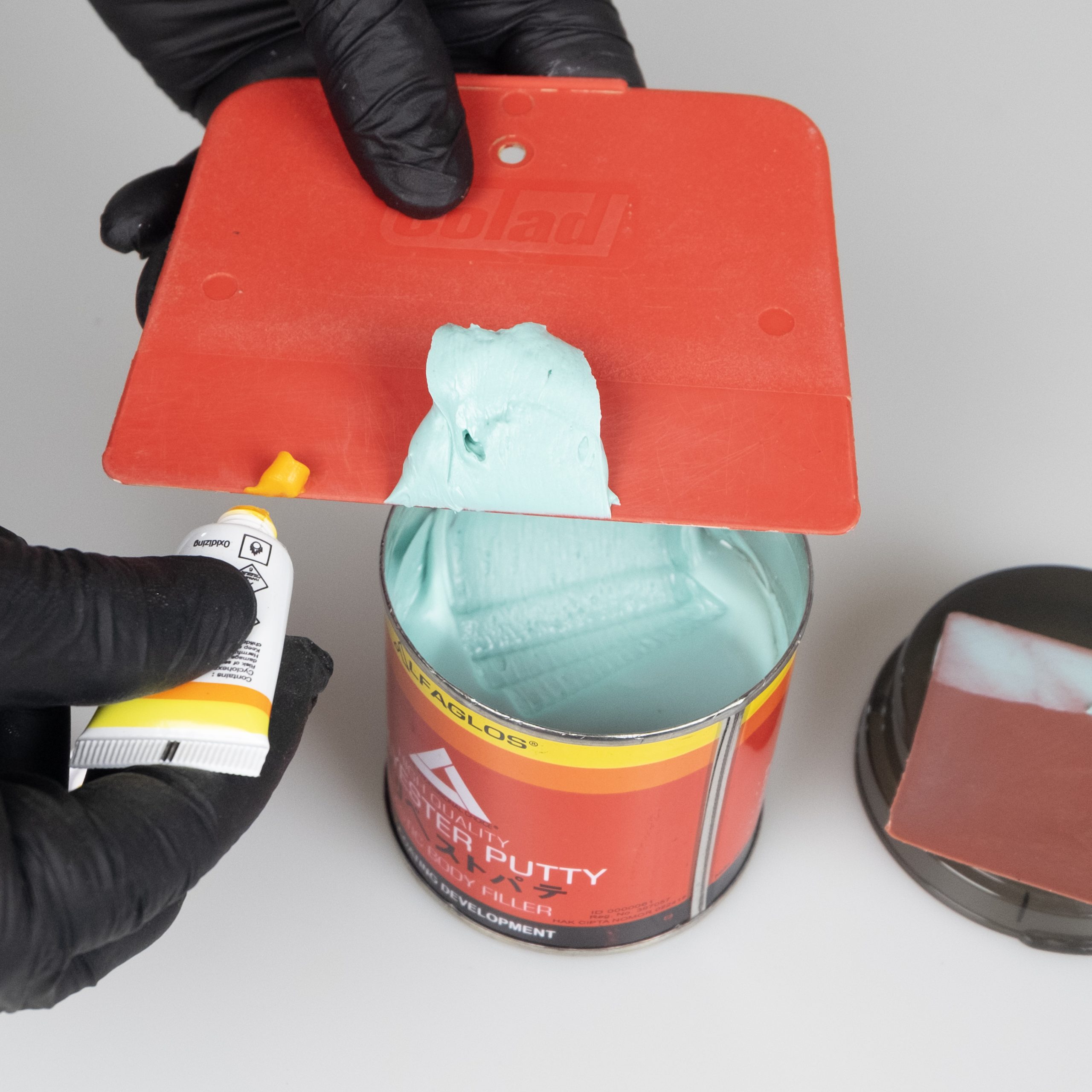
Polyester putty is a vital material in car body repair due to its ability to fill dents, scratches, and imperfections on the vehicle’s surface. However, many workshop owners and DIY users face the problem of putty hardening quickly during storage. If not stored properly, polyester putty can go bad before it is fully used.
Why Does Polyester Putty Harden During Storage?
Before discussing the proper storage methods, it’s important to first understand why polyester putty can harden during storage. Many users assume this issue is solely due to product quality, but environmental factors and technical mistakes when sealing the container also play a significant role.
1. Chemical Reaction of Polyester Putty with Air
One of the main reasons polyester putty hardens quickly is exposure to air. If the container is not tightly sealed, air can trigger a chemical reaction that causes the putty to lose its elasticity. This often results in the top layer hardening, even if the putty has only been used a few times.
2. Mistakes When Sealing or Storing the Container
Many cases of failed polyester putty storage occur because the container is not tightly sealed or small amounts of hardener accidentally mix into the main can. Even minor contamination can accelerate hardening, rendering the putty unusable.
3. The Impact of High Temperatures and Hardener Contamination
Storing putty in a hot environment also worsens its condition. While heat-resistant putty exists, regular polyester putty will harden faster if kept in a high-temperature area. The process becomes unavoidable, especially if even a small amount of hardener is mixed in.
Tips for Properly Storing Polyester Putty

Properly storing polyester putty not only extends its shelf life but also maintains its quality, ensuring it remains easy to apply and delivers a smooth finish. The following simple steps can help users save costs while keeping the putty ready for use.
1. Store in a Cool and Dry Place
To ensure the putty only hardens when applied, store it in a cool, dry place. Avoid areas exposed to direct heat from machinery or sunlight.
2. Always Keep the Container Tightly Sealed and Clean
After use, make sure the car putty container is tightly sealed and free from leftover putty around the edges. This prevents air and dust from entering, which can compromise the putty’s quality.
3. Avoid Direct Sunlight Exposure
Storing polyester putty in direct sunlight will only speed up its hardening. Keep it in a shaded area with a stable temperature to prolong its shelf life.
4. Do Not Mix Hardener into the Main Container
The most critical mistake is mixing hardener directly into the main container. Instead, take only the portion you need outside the can and add the hardener there. This way, the remaining polyester putty stays usable for longer.
How to Tell If Polyester Putty Is Still Usable

Even when stored properly, users may sometimes wonder whether the waterproof or heat-resistant car putty in their workshop is still usable. Checking the putty’s condition before use is crucial to ensure optimal body repair results and avoid wasted effort. There are a few simple indicators to watch for.
1. Check the Putty’s Texture and Consistency
High-quality polyester putty has a soft, thick texture and is easy to scoop with a spatula. If the surface feels hard, lumpy, or even stone-like when opened, the putty is no longer usable. Using hardened putty makes application difficult, uneven, and can cause the finish to crack prematurely. For workshops, this not only wastes time but also increases repair costs.
2. Check for Changes in Smell or Odor
Besides texture, smell can also be an indicator. Good polyester putty usually has a consistent resin-like aroma. If a strong, sharp, or unusual odor appears, the putty may have been exposed to air or heat. Using putty with a changed smell risks reducing adhesion to the car body and compromising the repair quality.
3. Observe Any Color Changes in the Putty
Color is also an important indicator when assessing the quality of waterproof or fast-drying car putty. Normally, putty has a solid and uniform color. However, if it starts to yellow, fade, or show blotches, it indicates oxidation or a chemical reaction due to improper storage. Using putty in this condition can result in uneven finishing, reduced paint adhesion, and an increased risk of cracking over time.
Alfaglos Hi-Grade Polyester Putty features a premium two-component formulation that is not only easy to apply and smooth out but also highly flexible and non-sticky. It adheres excellently to various surfaces such as steel, aluminum, and fiberglass, and remains easy to sand even after proper storage. With this quality, car body repairs become neater, more durable, and more efficient.
RELATED NEWS
16 Desember 2025
Car Repainting Steps & Essential Automotive Paint Materials
In the refinishing process, the quality of the final paint result is not determined solely by the
Read More >>
15 Desember 2025
Simple Tips to Protect and Maintain Your Car’s Exterior Paint
Taking care of your car’s exterior paint is actually not complicated, as long as it is done
Read More >>