Car Repainting Steps & Essential Automotive Paint Materials
16 Desember 2025 | By superadmin
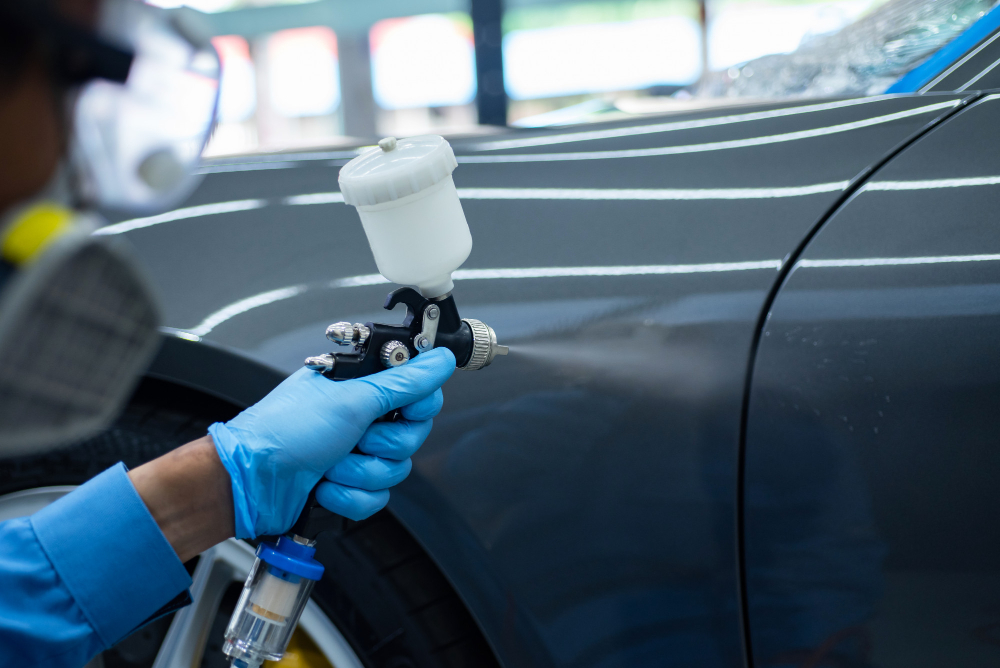
In the refinishing process, the quality of the final paint result is not determined solely by the main automotive paint used. There are various supporting materials that play a crucial role in surface preparation, improving adhesion, controlling color consistency, and accelerating the drying process. Understanding each of these components helps technicians produce a paint finish that is stronger, neater, and more durable.
Main Components in the Automotive Paint System
An automotive paint system works as a multi-layered structure, with each layer serving a specific function. These layers ensure optimal color appearance, strong adhesion, and long-term protection against weather exposure, UV rays, and corrosion.
1. Primer (Epoxy Primer Surfacer)
Primer is the foundational layer in an automotive painting system. Epoxy primer, in particular, provides superior corrosion protection—especially for metal panels such as car bodies that are frequently exposed to moisture. This layer creates a strong barrier against oxidation while also enhancing adhesion for the subsequent paint layers.
Meanwhile, primer surfacer is used to improve adhesion when body filler is required. In refinishing work that involves putty or filler application, epoxy filler is applied to fill surface pores, smooth out imperfections, and seal the sanded filler layer. This step prevents excessive absorption and ensures a consistent surface for the next coating layer.
2. Basecoat
The base coat is the primary color layer in an automotive paint system. This is the stage where the vehicle’s color effect, visual character, and overall tone are defined. The quality of the base coat is highly influenced by spray technique, paint viscosity, and environmental control during application.
This layer does not provide strong mechanical protection, which is why it requires a clear coat as a protective layer. However, the role of the base coat is critical: inconsistent pigment formulation or improper application can result in uneven, patchy finishes or color mismatches with the OEM standard. For this reason, precise control of film thickness, spray overlap, and spray gun pressure is essential.
3. Clear Coat Polyurethane
Clear coat is the final layer that provides both physical protection and aesthetic enhancement to the painted surface. This layer is made from specialized resins designed to resist scratches, UV exposure, oxidation, and mild chemical substances. Without a durable clear coat, the base coat will fade and deteriorate easily—even if the color accuracy is already correct.
In professional automotive painting systems, clear coat quality is a key factor in long-term durability. A well-formulated clear coat helps minimize the risk of fading, yellowing, and orange peel texture. Clear coat is typically applied in one to two layers, activated with a hardener, and followed by a curing process to ensure optimal film hardness.
Beyond protection, clear coat also defines the premium final appearance of the paint finish. It is available in several types, including gloss clear coat, which enhances shine and color depth, and matte or satin clear coat, which delivers a smoother and more refined look. The choice of clear coat can be tailored to achieve the desired aesthetic effect.
Materials for Surface Cleaning and Stabilization
The cleaning stage is the most critical phase before priming and painting. Even the smallest contaminants—such as oil, silicone, or microscopic dust—can cause defects like fisheyes, cratering, or paint delamination. For this reason, using the correct cleaning materials is a fundamental step to ensure proper paint adhesion and contamination-free results.
At this stage, technicians are not only cleaning the surface but also stabilizing the panel condition to prepare it for subsequent processes such as filling, sanding, or paint spraying.
1. Degreaser / Wax & Grease Remover
Degreaser, or wax and grease remover, is a solvent-based cleaning material designed to eliminate oil, wax, silicone, grease, and other oil-based contaminants. These types of contaminants cannot be removed with water alone, which is why degreasing is a standard step in every automotive refinishing process.
This material works by dissolving and lifting oily residues that are often invisible to the naked eye but have a significant impact on paint quality. Without proper degreasing, paint may develop non-adhering spots such as fisheyes, or trap contaminants beneath the coating, leading to premature peeling or failure.
In addition, degreaser helps create a “neutral” surface, allowing primer and surfacer layers to adhere more evenly and consistently. Application is straightforward: the product is sprayed onto the surface to be painted and then wiped thoroughly using a lint-free cloth, such as a Kimtech cloth.
2. Surface Cleaner
Surface cleaner is used to stabilize the surface after sanding or filler application. It typically has a lighter formulation than a degreaser and is intended to remove sanding dust, light oils from handling, and microscopic particles left behind after the leveling process.
This material helps ensure that the panel is free from non-greasy contaminants that could interfere with the adhesion of primer or surfacer layers. Its use also prevents unwanted chemical reactions between the paint system and abrasive residues. At the final stage, surface cleaner leaves the surface in an ideal condition—clean, balanced, and ready to receive the next coating layer without altering the sanded texture.
3. Tack Cloth
Tack cloth is a specialized fabric treated with a light tacky resin designed to capture fine dust particles. Dust is a contaminant that is often difficult to see but becomes highly visible once the paint dries, appearing as small specks, rough texture, or trapped fibers beneath the paint film.
Tack cloth is typically used immediately before spraying primer, base coat, or clear coat. It leaves no residue and effectively attracts fine particles that cannot be removed by air blowers or regular wiping cloths. For this reason, tack cloth serves as the final line of defense to ensure the panel is completely free of particles that could compromise the quality of the final finish.
Materials That Help Create a Paint-Ready Surface
After the cleaning stage, the vehicle panel must be prepared to achieve a flat, stable surface with an ideal adhesion texture. Materials in this category play a crucial role in forming the physical foundation of the paint system.
1. Polyester Putty
Polyester putty is used to fill dents, deep scratches, large pores, and structural imperfections on panel surfaces. This material consists of polyester resin combined with a hardener, which triggers a chemical reaction that allows the putty to cure quickly while remaining easy to shape.
Putty functions as a surface profiling material: after filling and sanding, the panel becomes flat again, preventing repair marks from showing through the paint. One of the main advantages of polyester putty is its strong adhesion to various substrates, along with its ability to create a rigid surface that resists cracking.
2. Surfacer
Modern surfacer formulations are designed to dry quickly and sand easily, allowing technicians to perform leveling without damaging the underlying layers. This coating also functions as an intermediate bonding layer between the putty and the base coat, ensuring there is no contamination or uneven absorption that could lead to color blotching in the final stage.
A high-quality surfacer produces a smooth surface, resists sinkage, and remains stable against solvents, enabling the base coat to adhere evenly without patchiness. For this reason, surfacer is often considered the “refinement stage” before entering the color application process.
Supporting Materials for Color Control and Coating Consistency
Supporting materials in this category are used to control how paint behaves during spraying—from drying speed and pigment distribution to overall color purity on the panel. Without proper control, the paint finish may appear uneven, fail to match the intended color, or develop blotchy and striping effects.
1. Thinner & Retarder
Thinner is used to control paint viscosity so it becomes ideal for spraying. When viscosity is properly adjusted, paint droplets are atomized evenly as they exit the spray gun, resulting in smoother and more uniform color distribution. Thinner also influences paint leveling—how the coating flows and covers the surface without causing dry spray or rough areas.
Retarder, on the other hand, slows down the evaporation rate of the thinner to better control the flash-off process. This material is especially useful in hot conditions or when painting large panels that require longer application time. By using a retarder, pigments have more time to settle and spread evenly, reducing the risk of patchy base coats.
2. Binder & Toner
Binder is a key component in base coat formulations, responsible for holding, binding, and dispersing pigments so the color remains stable during application. It helps prevent issues such as mottling, uneven color distribution, and inconsistent absorption.
In addition, the binder influences opacity, allowing the color layer to cover the underlying surface more evenly and consistently.
RELATED NEWS
15 Desember 2025
Simple Tips to Protect and Maintain Your Car’s Exterior Paint
Taking care of your car’s exterior paint is actually not complicated, as long as it is done
Read More >>
12 Desember 2025
Differences in Car Panel Materials: Steel, Aluminum, and Plastic
In today’s automotive industry, car panel materials are no longer limited to a single type. Each material—whether
Read More >>