To Keep Your Spray Gun in Good Condition, Learn Its Types and How to Use It!
14 Agustus 2025 | By Alfatama Admin
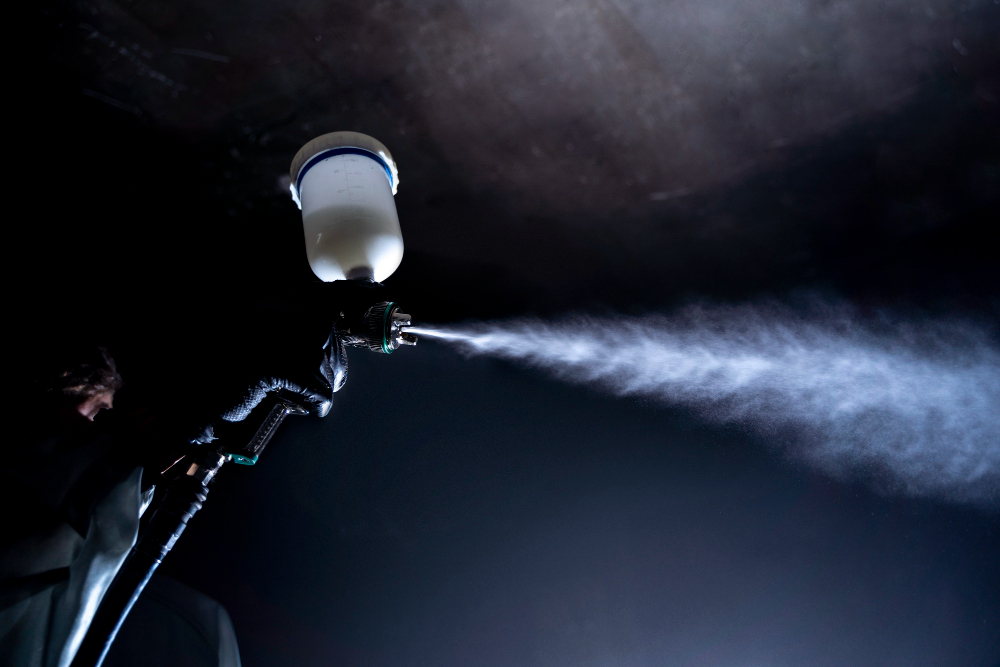
In the world of body repair, spray guns are essential tools for achieving neat and even paintwork. However, many automotive technicians or hobbyists still lack a proper understanding of the types of spray guns, as well as their correct usage and maintenance. Even small mistakes can have a big impact on the final quality and the lifespan of the tool itself.
Types of Spray Gun and Their Functions in Body Repair
Here are three types of spray guns used in body repair.
HVLP (High Volume Low Pressure)
The HVLP spray gun is designed to produce a fine spray with high paint efficiency. Using low pressure and high air volume, HVLP significantly reduces overspray, making it more paint-saving and environmentally friendly. This type of spray gun is ideal for the finishing stage, such as applying clear coat, as it delivers a smoother and more even result. HVLP is also a favorite choice in many professional workshops for its ability to achieve factory-standard painting quality.
LVLP (Low Volume Low Pressure)
Next is the LVLP spray gun, which operates with lower air volume and pressure compared to HVLP. Its main advantage lies in its efficient air consumption, making it ideal for small workshops or use with low-capacity compressors. Even so, LVLP can still deliver neat and consistent paintwork. However, because its spray power is gentler, this type of spray gun is less recommended for painting large areas, as the process will be slower compared to other types.
Conventional Spray Gun
The conventional spray gun, also known as the high-pressure spray gun, uses high air pressure to produce a strong and fast paint spray. This makes it highly effective for applying base coats or when an even coverage is needed in a short time. Although it consumes more paint and air compared to HVLP or LVLP, this spray gun remains widely used, especially when speed is the top priority. Since its spray is more aggressive, it must be used carefully to avoid paint buildup or excessive overspray.
How to Use a Spray Gun Properly

Using a spray gun correctly not only affects the quality of the paintwork but also directly impacts the tool’s longevity. Each type of spray gun has different operating characteristics, so the technique must be adjusted accordingly to achieve optimal results and prevent premature wear on components such as the nozzle, needle, or valve.
Read More: Manfaat Epoxy untuk Body Repair dan Pengecatan Mobil
Adjust the Air Pressure According to the Tool’s Specifications
The first thing to pay attention to is air pressure adjustment. For example, an HVLP spray gun requires lower pressure compared to a conventional spray gun. If the pressure is not set correctly, the spray result may turn out too thick, rough, or uneven.
Maintain the Ideal Distance When Spraying
The distance between the spray gun and the surface greatly affects the final result. The ideal distance is generally around 15–20 cm, depending on the type of spray gun and paint used. If it’s too close, the paint may build up and drip. On the other hand, if it’s too far, the paint can dry in the air before reaching the surface, resulting in a rough and uneven texture.
Your Hand Movement Must Be Steady and Consistent
Spraying should be done horizontally or vertically at a steady speed. Avoid pausing too long in one spot, as this can cause paint buildup or even damage the surface. Most spray guns are designed to deliver the best results when used with a consistent rhythm and a spray position parallel to the surface.
Pay Attention to the Spraying Angle
The spray angle should be perpendicular to the surface to ensure even paint distribution. Spraying from a slanted angle can result in inconsistent paint thickness and visible streaks. This applies to all types of spray guns—HVLP, LVLP, and conventional.
Tips for Maintaining a Spray Gun to Keep It Durable

The most crucial step after painting is cleaning all parts of the spray gun, especially the nozzle, air cap, and paint cup. Use a suitable thinner or solvent to prevent any leftover paint from drying and clogging the flow. Avoid scraping the inner surfaces harshly, as this can damage the spray precision of any spray gun type.
Regularly check the condition of seals, gaskets, and other small components. Worn-out parts can cause air leaks or unstable paint distribution. Lubricating the moving parts is also highly recommended to maintain the mechanical performance of any spray gun, especially those used intensively in workshops.
After cleaning, make sure the spray gun is stored in a dry, moisture-free environment. High humidity can trigger rust or stubborn buildup, especially on fine metal components inside the tool. Proper storage is essential for all spray gun types, as environmental damage can occur unnoticed if the tool is left carelessly.
For perfect body repair results, it’s not just the spray gun that matters—supporting materials like putty must also be of high quality. If you’re looking for the best metal putty that dries quickly, sands easily, and adheres strongly, Alfaglos is the right choice. Its formula has been proven in many professional workshops and works perfectly with various spray gun types for optimal body repair results.
RELATED NEWS
16 Desember 2025
Car Repainting Steps & Essential Automotive Paint Materials
In the refinishing process, the quality of the final paint result is not determined solely by the
Read More >>
15 Desember 2025
Simple Tips to Protect and Maintain Your Car’s Exterior Paint
Taking care of your car’s exterior paint is actually not complicated, as long as it is done
Read More >>