Best Car Putty Recommendations for Rust Removal
11 Agustus 2025 | By Alfatama Admin
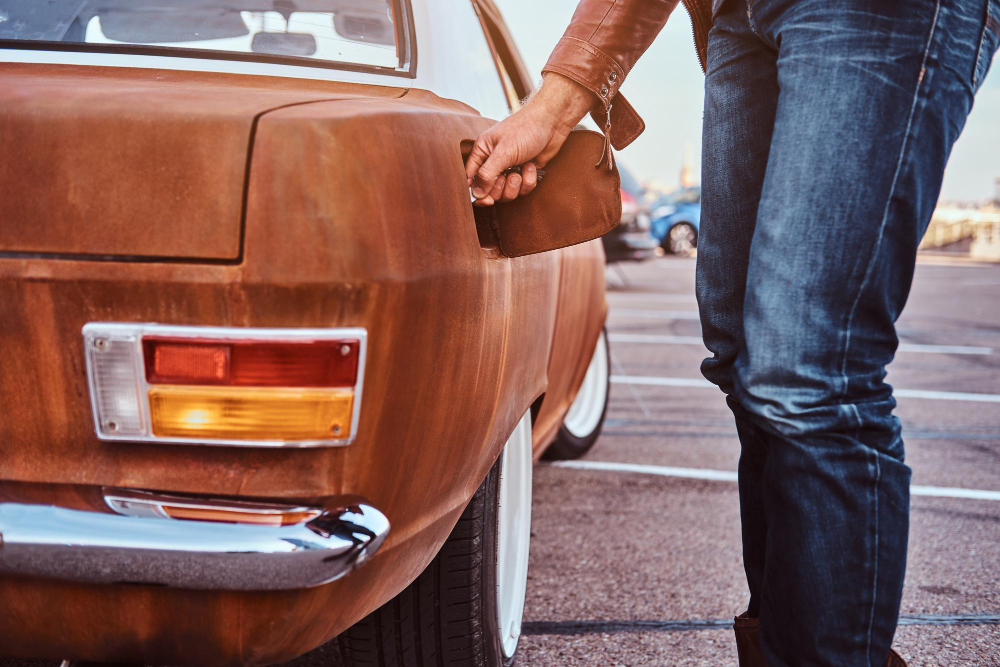
Car rust removers are a go-to solution when a vehicle’s body starts showing signs of oxidation. Left unchecked, rust can spread and compromise the metal’s strength, meaning repairs will require more than simply cleaning the affected area.
This is where various repair materials, including car putty, come into play. However, it’s important to understand that putty is not a rust remover, but rather a part of the repair process after the rust has been completely eliminated.
Can Car Putty Really Remove Rust?
Many people still misunderstand the function of car putty, especially when it comes to rust removal. Quite a few believe that putty can be applied directly to address rust, when in fact, that’s not the case. Putty is neither a chemical nor a tool that can remove rust from metal surfaces. Instead, it serves solely as a covering material after the rust removal process has been completed.
In repairing a car body affected by rust, the first and most crucial step is to remove the rust itself. This can be done through various methods, such as sanding, using a car rust remover solution, or applying sandblasting techniques. Once the metal is completely clean and free of rust, only then is it ready to be filled with putty.
What Is Car Putty Used For?

The main function of car putty is to smooth out damaged or uneven surfaces caused by corrosion. Small holes, scratches, or areas eroded by rust are filled with putty so that the surface becomes even again before the painting process. If the rust is not removed beforehand and the area is puttied immediately, there is a high chance that the rust will reappear from beneath the surface. This will not only ruin the repair results but also accelerate further damage to the car body.
Why Rust Must Be Removed Before Using Car Putty?

Car rust is active and can continue to spread if not properly addressed. If putty is applied directly over oxidized metal, it can lead to peeling, uneven surfaces, and even paint bubbling in a short period of time. This is why car rust removers play such an important role in the restoration process.
Using methods such as coarse sanding, chemical rust removers, or sandblasting ensures that the metal is completely clean before the puttying stage. With a rust-free surface, the putty can adhere perfectly, creating a strong and durable layer.
Best Types of Car Putty for Rust-Damaged Panels
Once rust has been properly removed, choosing the right type of putty becomes the next crucial step in the repair process. For areas previously affected by rust, the choice of putty should take into account its strength, adhesion, and resistance to temperature or humidity changes.
Two types commonly used in repairing rust-damaged car bodies are CHPO (Cobalt-Hardener Polyester) and BPO (Benzoyl Peroxide). Both are polyester-based putties, but they have different characteristics in terms of application and the strength of the final result.
Read More: Cara Memilih Dempul Mobil Terbaik agar cat mobil Tahan Lama
CHPO is known as the best car putty for thin applications. It dries quickly, is easy to sand, and is suitable for leveling light surfaces without significant structural load. Due to its lightweight nature, CHPO is often chosen for final touches or refinements on small areas that have undergone thorough rust removal.
Meanwhile, BPO is denser and offers higher durability. This material is ideal for patching body sections that have sustained significant or deep damage. Thanks to its strength, BPO is often recommended as an excellent metal putty for lower door sections, curved body panels, or areas that were previously heavily corroded. Although its drying time is slightly longer compared to CHPO, the final result is sturdier and more stable.
How to Apply Car Putty to Prevent Rust
Applying putty is not just about covering holes or uneven surfaces, especially when the repair is carried out on a body panel that was previously rusted. If the correct steps are not followed, rust can reappear beneath the surface, even after the car has been repainted.
Thoroughly Remove All Rust

The first step is to ensure that all rust is completely removed from the metal surface. This can be done through various methods, ranging from manual sanding and using car rust remover solutions to sandblasting for a cleaner and more even result. The goal is to eliminate all layers of oxidation so that the metal surface is ready to receive the next coating material.
Apply Primary Epoxy Before Putty

Once the rust has been removed, the metal surface should be immediately coated with an epoxy primer surfacer. This layer acts as a barrier to prevent rust from resurfacing from within the metal. Epoxy primer also improves the adhesion of both the putty and paint in the subsequent stages.
Read More: Mengapa Epoxy Mobil Cocok untuk Filler Cat Konvensional?
Many professional technicians consider epoxy an inseparable part of using high-quality metal putty. Without epoxy, putty is prone to detaching over time, especially if the repaired area is exposed to extreme weather or high humidity.
Finishing with Sanding and Paint

Once the epoxy primer has dried, proceed by applying the best car putty according to the needs of the repair area—whether CHPO for light applications or BPO for major repairs. Make sure the putty is applied evenly, not too thick, and follows the contours of the car body.
After the putty has dried, the surface should be sanded until it is perfectly smooth. This step is crucial for achieving a seamless finish that blends with the rest of the body. The final stage is repainting, starting with a primer filler, followed by the base color coat, and ending with a clear coat as the final protective layer.
When repairing a car body that has been affected by rust, every stage must be done correctly—from rust removal to the finishing process. To support this, products from Alfaglos such as epoxy primer surfacer can be a reliable solution. In addition, there are also top-quality car putty options suitable for all kinds of repairs, from minor touch-ups to major restorations. With the right materials and proper procedures, a long-lasting finish is no longer just a hope.
RELATED NEWS
16 Desember 2025
Car Repainting Steps & Essential Automotive Paint Materials
In the refinishing process, the quality of the final paint result is not determined solely by the
Read More >>
15 Desember 2025
Simple Tips to Protect and Maintain Your Car’s Exterior Paint
Taking care of your car’s exterior paint is actually not complicated, as long as it is done
Read More >>